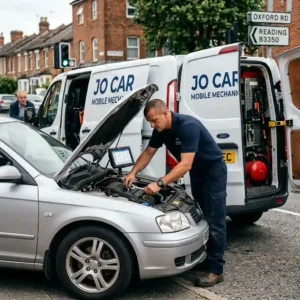
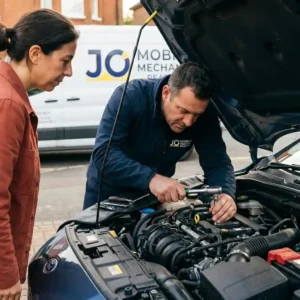
An unexpected warning light glowing on your instrument cluster, an engine that suddenly begins to misfire, or a abrupt loss of power on your driveway can bring your day to an immediate halt. Guessing which internal component has failed often leads to frustration and wasted money on parts you never needed. Modern vehicles rely on intricate networks of digital sensors, microprocessors, and electronic control units (ECUs) to manage everything from precise fuel injection timing to delicate exhaust emissions. Arranging professional Engine Diagnostics Reading services directly bridges the gap between confusing dashboard symbols and accurate, cost-effective mechanical repairs, ensuring vehicle faults are properly identified before minor issues turn into catastrophic engine failure.
What Is Engine Diagnostics Reading?
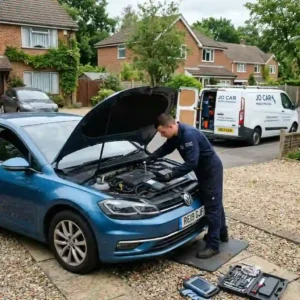
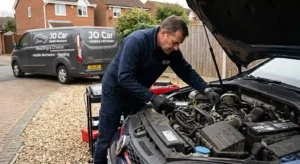
An engine diagnostic check is a systematic process of communicating with your vehicle’s onboard computer network to retrieve stored diagnostic trouble codes (DTCs) and monitor real-time operational performance data. Rather than blindly replacing expensive sensors based on vague symptoms, an expert Engine Diagnostics Reading callout retrieves precise data parameters directly from the central engine management system. This provides clear, actionable insight into your car’s complete mechanical and electrical health right at your doorstep.
The Diagnostic Flow: How Hidden Problems Are Uncovered
To understand how professional fault-finding works, it helps to view the process as a logical chain that connects broad, everyday vehicle behavior to specific repair actions. This structured hierarchy ensures no detail is overlooked:
Mobile Mechanic Reading
       │
       ▼
Engine Diagnostics Reading
       │
       ▼
Warning Lights
       │
       ▼
Fault Codes
       │
       ▼
Vehicle Symptoms
       │
       ▼
Diagnosis
       │
       ▼
Repair Decision
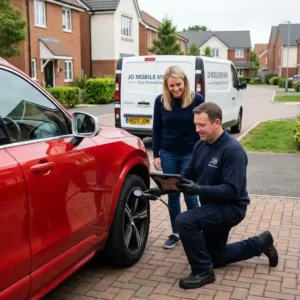
- Mobile Mechanic Reading: A mobile specialist arrives at your home or workplace fully equipped with dealer-level diagnostic scanning equipment, completely eliminating the stress of driving a faulty car or paying expensive towing fees.
- Engine Diagnostics Reading: The technician plugs an advanced OBD-II (On-Board Diagnostics) scanner into your vehicle’s diagnostic port to initiate full digital system communication.
- Warning Lights: The diagnostic software identifies active, historical, or pending warning lights on your dash—such as Check Engine, ABS, DPF, or Airbag indicators.
- Fault Codes: Specific diagnostic trouble codes (DTCs) are extracted directly from the ECU memory (for example, code P0300 indicating a random or multiple cylinder misfire).
- Vehicle Symptoms: The technician cross-references retrieved error codes against real-world driver symptoms, such as rough idling, sudden stalling, or excessive fuel consumption.
- Diagnosis: Live sensor data (such as mass air flow rates, short and long-term fuel trim percentages, and oxygen sensor voltage oscillations) is monitored while the engine runs to pinpoint the true root cause.
- Repair Decision: A clear, honest repair plan is established—determining whether the issue requires a simple wiring repair, a fresh sensor, or a deeper mechanical overhaul.
8 Common Symptoms That Require Engine Diagnostics Reading
Ignoring early warning signs often causes cascading mechanical failures that lead to skyrocketing repair bills. Booking a professional Engine Diagnostics Reading check is strongly recommended as soon as you notice any of these typical warning signs:
1. Check Engine Light Illuminated
Whether glowing steadily or flashing rapidly, a check engine symbol signals an active fault within the engine management or emissions control systems. A flashing light usually indicates a severe misfire that can rapidly overheat and destroy your catalytic converter if ignored.
2. Rough Idling or Engine Misfires
If your car shudders, vibrates excessively while waiting at traffic lights, or stutters during acceleration, your ignition or fuel delivery system is compromised. An Engine Diagnostics Reading check isolates the exact cylinder experiencing ignition dropouts or injector failure.
3. Loss of Power and Acceleration
When your vehicle struggles to gain speed or enters protective “limp mode” (which artificially restricts engine RPM to prevent internal destruction), diagnostic scanning identifies whether turbocharger boost sensors, throttle bodies, or high-pressure fuel pumps are failing.
4. Poor Fuel Economy
A sudden drop in your miles per gallon (MPG) often points to faulty oxygen sensors, stuck-open coolant temperature sensors, or failing mass air flow (MAF) meters that incorrectly signal the engine to burn excessive fuel.
5. Excessive Exhaust Smoke
Black exhaust smoke indicates an overly rich fuel mixture, blue smoke points to burning engine oil, and thick white smoke suggests engine coolant is entering the combustion chambers through a failing head gasket. An Engine Diagnostics Reading scan clarifies critical sensor readings to narrow down the leak.
6. DPF / Emissions Warning Messages
Modern diesel vehicles equipped with Diesel Particulate Filters (DPF) require regular automatic soot regeneration. Diagnostic testing checks soot saturation percentages and exhaust backpressure sensors before the filter becomes completely blocked and unrecoverable. Under official DVSA Vehicle Testing Standards, unresolved emissions faults and active dashboard warning lights result in an immediate MOT failure.
7. Hard Starting or Extended Cranking
If your engine turns over for several seconds before finally catching, an Engine Diagnostics Reading assessment evaluates real-time fuel pressure sensor data, crankshaft position sensors, and glow plug relay circuits.
8. Unexplained Stalling
If your vehicle unexpectedly cuts out while driving or coasting to a stop, diagnostic error logs reveal whether fuel pump relays, camshaft position sensors, or idle air control valves are dropping signal voltage when hot.
Why Fault Codes Alone Aren’t Enough
A common misconception among vehicle owners is that plugging in a basic reader tells you the exact mechanical part to buy. In reality, a fault code only indicates that a specific circuit or sensor reading has fallen outside its expected factory parameters.
For instance, an oxygen sensor code does not automatically mean the sensor itself is broken—it could simply be responding correctly to an intake vacuum leak, a blown fuse, a frayed wire, or a cracked exhaust manifold upstream. A professional Engine Diagnostics Reading service combines code retrieval with live-data analysis and physical component testing to ensure you replace only the part that is actually defective.
To know more visit the About us page directly contact us via the Contact us page!
Mobile Diagnostic Testing vs. Workshop Visits
Choosing between an on-site technician and a traditional repair shop comes down to convenience, speed, and overall value:
| Feature / Benefit | On-Site Engine Diagnostics Reading | Traditional Garage Visit |
| Convenience | Technician comes directly to your home or office | Requires driving a faulty car or paying for a tow truck |
| Time Saved | Diagnostics completed on your driveway in 30–45 mins | Car left sitting at a workshop for hours or days |
| Direct Communication | Talk directly with the technician analyzing live data | Speak only to reception staff behind a counter |
| Immobilized Vehicles | Perfect solution for non-starting or “limp mode” cars | Incurs extra towing charges and breakdown logistics |
| Cost Transparency | Upfront pricing with no hidden facility overheads | Higher labor rates to cover workshop physical overheads |
What to Expect During Your Engine Diagnostic Check
Understanding what happens during an on-site appointment gives you total confidence in the results:
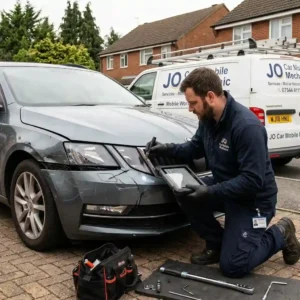
- Initial Assessment & Plug-In: The technician locates your OBD-II port (usually under the dashboard) and links their computer scanner to the vehicle’s network.
- System Health Scan: A full scan polls every module in the vehicle—including the Engine Control Module (ECM), Transmission Control Module (TCM), ABS, and Body Control Module (BCM).
- Live Data Stream Monitoring: The technician runs the engine to review real-time parameters such as coolant temperature, fuel pressure, air intake temperature, and timing advance.
- Physical Inspection: Wiring harnesses, vacuum lines, and mechanical connections related to the triggered codes are visually and physically tested.
- Clear Findings & Plan: You receive a full explanation of the fault, along with advice on whether the repair can be completed immediately on your driveway.
Frequently Asked Questions
How long does a full engine diagnostic scan take?
A comprehensive Engine Diagnostics Reading session—including complete error code extraction, live sensor data monitoring, and physical component checks—typically takes between 30 to 45 minutes on your driveway.
Can a diagnostic check tell me why my engine light turned on and off again?
Yes. Vehicle ECUs automatically store “pending” and “historical” error codes in their memory even after a dashboard light turns off temporarily, allowing your technician to trace intermittent electrical or sensor faults.
Will simply clearing the fault code fix my car?
No. Clearing a code only resets the computer memory and turns off the warning light temporarily. If the underlying mechanical or electrical fault is not physically repaired, the ECU will detect the anomaly again and re-illuminate the light within a few miles of driving.
Can engine diagnostics be carried out if my car won’t start at all?
Yes. As long as your vehicle’s battery has enough charge to power the ignition switch and onboard electronics, an Engine Diagnostics Reading scanner can successfully establish communication with the ECU to identify starting faults.
Is an engine diagnostic check necessary before booking an MOT?
It is highly recommended. Active warning lights on your instrument cluster—especially engine, airbag, or ABS symbols—are instant failure items under current MOT inspection rules. Resolving these issues beforehand saves you time and re-testing fees. For further visit the Service page.
Need Engine Diagnostics Reading in Reading?
If your car is displaying warning lights, experiencing misfires, or losing power on your driveway, don’t leave fault-finding to expensive guesswork. Getting a precise, professional assessment at your location saves time, prevents unnecessary parts purchases, and keeps your vehicle running reliably.
To book driveway diagnostic scans and expert fault-finding, visit our main Mobile Mechanic Reading page, or Service page or connect with a specialist through our Contact Us page to schedule your Engine Diagnostics Reading callout today.