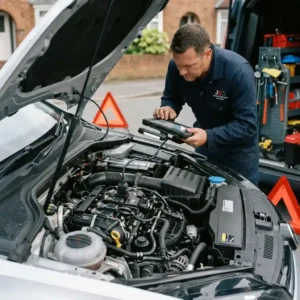
The engine’s internal mechanics rely on precise timing. Among all the critical components beneath your bonnet, few play a more vital role in keeping your engine synchronized than the timing belt (often referred to as the cambelt). A failure here can lead to severe, catastrophic engine damage that often results in astronomical repair bills or complete engine replacement.
For drivers seeking a Mobile Timing Belt Replacement Reading service, understanding how this complex engine system works, knowing what to expect during a repair, and evaluating on-site feasibility is essential. Booking a dedicated Mobile Timing Belt Replacement specialist allows you to get expert advice right at your doorstep without taking time off work or driving to a distant garage. Here are 5 key facts every car owner in Reading should know before scheduling an inspection or replacement.
Fact 1: What a Timing Belt Does (and Why It Matters)
The timing belt is a reinforced rubber belt with precision-moulded teeth that connects the engine’s crankshaft to the camshaft (or camshafts). Its primary function is to synchronize the rotation of these two shafts. This ensures that the engine valves open and close at exact microsecond intervals relative to the position of the pistons during the four-stroke combustion cycle.
- Interference Engines: In many modern petrol and diesel vehicles, the clearance between the open valves and the rising piston is extremely tight. If the timing belt snaps or slips off its sprockets, the camshaft stops turning while the crankshaft continues to spin. As a result, the pistons collide directly with the open valves at thousands of revolutions per minute, causing bent valves, shattered camshafts, damaged cylinder heads, or complete engine destruction.
- Non-Interference Engines: Even in non-interference engines where internal piston-to-valve contact does not occur, a broken belt will immediately stall the engine, cutting off power steering and brake assistance. This leaves you stranded on the A33, M4, or parked outside your home, requiring an urgent Mobile Timing Belt Replacement Reading assessment.
Keeping your engine’s timing synchronized prevents catastrophic mechanical failure and ensures smooth power delivery, proper fuel efficiency, and clean emissions. You can learn more about comprehensive engine care and diagnostics by exploring our Services page.
Fact 2: Replacement Intervals Vary — There Is No “Universal” Schedule
A common misconception among drivers is that every vehicle requires a new timing belt at a fixed mileage, such as 60,000 miles. In reality, manufacturer replacement schedules vary significantly based on vehicle make, model, engine displacement, oil maintenance history, and production year.
| Factor Influencing Belt Wear | Impact on Replacement Timing & Mobile Timing Belt Replacement Reading Needs |
| Manufacturer Engineering | Recommended intervals can range from 40,000 miles or 4 years up to 100,000+ miles or 10 years depending on specific engine design. |
| Driving Conditions | Frequent stop-start urban driving in central Reading, short trips, or severe idle time accelerates rubber degradation due to constant thermal cycling. |
| Fluid Contamination | Engine oil or coolant leaks near the timing cover weaken the synthetic rubber compound, leading to premature cracking, teeth stripping, or splitting. |
| Age vs. Mileage | Even low-mileage vehicles require belt changes because rubber naturally degrades over time due to oxygen and ozone exposure, regardless of miles driven. |
Understanding Environmental & Operational Stress on Engine Belts
Synthetic rubber compounds are engineered to withstand extreme heat and friction, but they are not impervious to mechanical wear and environmental stress. In a climate like Berkshire’s, vehicles experience cold, damp winter mornings followed by intense summer heat cycles. Cold starts place significant tensile strain on a cold timing belt, particularly if the engine oil has thickened or the water pump pulley offers slight resistance.
Over time, this continuous expansion and contraction causes microscopic stress fractures along the belt teeth. If left uninspected, these microscopic fractures develop into full structural cracks. Scheduling a regular Mobile Timing Belt Replacement Reading inspection ensures that age-related belt fatigue is identified before the belt loses structural integrity. To review pricing standards and labor guidelines across Reading, check out our comprehensive Cost Guide.
Fact 3: Not All Vehicles Use a Timing Belt (Belts vs. Chains)
Before searching for a Mobile Timing Belt Replacement Reading specialist, it is crucial to verify whether your vehicle actually has a timing belt. Many modern engines use a metallic timing chain instead of a rubber belt.
- Timing Belts: Made of reinforced synthetic rubber and high-tensile internal cords. They run dry outside the main engine casing behind plastic protective covers and require strict periodic replacement as part of routine preventative maintenance.
- Timing Chains: Made of hardened steel links (similar to a heavy-duty bicycle chain). They operate inside the engine, constantly lubricated by engine oil, and are designed to last the life of the engine, though they still require tensioner checks and frequent oil changes to prevent stretch.
How to Check Your Vehicle’s Requirement:
- Consult Your Vehicle Handbook: Check the routine maintenance schedule section of your owner’s manual for specific cambelt service intervals.
- Review Vehicle Service History: Check previous service invoices and stamped handbooks to see when the belt was last changed by a professional mechanic.
- Contact a Specialist: Provide your vehicle registration number to a Mobile Timing Belt Replacement Reading technician so they can verify official manufacturer technical specifications for your exact engine code.
Fact 4: Related Components Are Usually Replaced Together
Replacing a timing belt is a detailed and labor-intensive job because reaching the belt requires removing auxiliary drive belts, engine covers, alternator brackets, and specialized engine mounts. Because reaching these internal areas requires substantial labor, replacing related components simultaneously during a Mobile Timing Belt Replacement Reading job is standard industry practice:
- Tensioners and Idler Pulleys: These bearings maintain proper belt tension and alignment across the sprockets. Worn bearings in an idler pulley can seize up under heat, causing even a brand-new belt to friction-burn and snap within miles.
- Water Pump: On many engine designs, the timing belt directly drives the water pump pulley. Replacing the water pump during a Mobile Timing Belt Replacement Reading service prevents having to pay for the exact same labor twice if the pump bearing fails or leaks coolant later.
- Crankshaft & Camshaft Oil Seals: Inspected for oil weeping that could contaminate the new rubber belt, ensuring the new installation remains clean and oil-free.
Complete Timing Component Kit:
[New Timing Belt] + [Tensioner Pulley] + [Idler Bearings] + [Water Pump (if driven by belt)]
Replacing these components together as a complete kit ensures long-term operational reliability and avoids secondary repair costs down the road. To learn more about our engineering qualifications, mobile service vans, and local history, visit our About Us page.
Fact 5: On-Site Feasibility & Important Questions to Ask
Timing belt replacement is a technically demanding repair that requires precise alignment of the engine’s camshafts and crankshaft using specialized timing locking pins and locking tools.
Whether a Mobile Timing Belt Replacement Reading service can be performed at your home driveway, workplace, or private parking bay depends on several key operational factors:
- Vehicle Access & Ground Conditions: Safe access requires a firm, level surface (such as concrete, asphalt, or block paving) with enough clearance to jack up the vehicle and position safety stands securely.
- Engine Bay Complexity: Certain high-performance V6/V8 engines or tightly packed engine bays require specialized overhead lifting cranes or full engine removal that are better handled in a static workshop environment.
- Weather Protection & Safety: On-site repairs require protection against heavy rain or standing water to keep delicate internal engine components clean, dry, and free from dirt contamination during assembly.
What to Ask Before Arranging Repair:
- Is my specific vehicle model suitable for an on-site Mobile Timing Belt Replacement Reading service?
- Does the estimate include a complete timing kit (belt, tensioners, pulleys, and water pump) rather than just the belt?
- Will specialized timing locking tools be used to verify exact engine timing before starting the engine?
For official guidance on breakdown safety, vehicle safety standards, and roadworthiness, you can consult road safety advice published by National Highways Breakdown Safety.
Preparing Your Vehicle for a Mobile Service Visit
To ensure your Mobile Timing Belt Replacement Reading appointment proceeds smoothly on your driveway, taking a few simple preparation steps is helpful:
- Level Parking Space: Ensure the vehicle is parked on a flat, solid surface so hydraulic jacks and safety axle stands can be deployed safely.
- Clear Side Clearance: Leave approximately 1 to 1.5 meters of working space around the front engine bay so the technician can maneuver tool trolleys and parts trays.
- Locking Wheel Nut Key: Place your locking wheel nut key on the driver’s seat, as removing the front offside wheel is often necessary to gain access to the lower crankshaft pulley.
- Workplace Clearance: If your Mobile Timing Belt Replacement Reading service is scheduled at an office car park, notify building management or security in advance to confirm mobile technician access.
If you have specific driveway access questions or need to discuss workspace suitability, feel free to contact our team via our Mechanic at Home page.
Frequently Asked Questions
What are the warning signs that a timing belt is failing?
Unlike brake pads that feature acoustic wear sensors, a timing belt often shows no obvious audible warning signs before snapping. However, subtle symptoms like high-pitched ticking noises from the timing cover, engine misfiring caused by a stretched belt jumping a tooth, or visible cracking, fraying, and oil contamination on the belt surface indicate an urgent Mobile Timing Belt Replacement inspection is needed.
Can I drive my car if the timing belt light or engine warning light comes on?
If an engine warning light appears or you hear unusual mechanical noises from the front of the engine, you should stop driving safely and arrange a Mobile Timing Belt Replacement Reading check. Continuing to drive with a loose or slipping belt can cause the timing to jump, resulting in immediate internal engine damage.
How long does a mobile timing belt replacement Reading service take?
Depending on engine layout, access room, and auxiliary component complexity, a Mobile Timing Belt Replacement Reading appointment involving a timing belt, tensioners, and water pump replacement typically takes between 2 to 4 hours to complete properly on-site.
Is a mobile timing belt replacement Reading service as reliable as a static garage?
Yes, provided the technician uses manufacturer-approved timing locking tools, calibrated torque wrenches, and complete OEM-quality component kits, a Mobile Timing Belt Replacement Reading service offers the exact same mechanical precision and reliability as a fixed garage workshop.
What happens if my water pump fails after changing only the timing belt?
If an old water pump bearing fails after a new belt is fitted, leaking coolant will contaminate the new belt, causing it to slip or rot. Furthermore, replacing the water pump later requires taking off the new timing belt all over again, doubling your labor costs. This is why a Mobile Timing Belt Replacement Reading specialist always recommends replacing the water pump at the same time.
Conclusion: Enquire About Your Vehicle’s Requirements Today
Protecting your engine from sudden timing belt failure starts with knowing your manufacturer’s service schedule and getting expert advice tailored to your vehicle’s exact engine code.
Whether you need a timing belt health check, advice on your replacement interval, or confirmation of on-site service feasibility, scheduling a Mobile Timing Belt Replacement Reading consultation with JO Mobile Mechanic is the smartest way forward.
Ready to secure your engine’s reliability? Explore our full range of maintenance solutions on our Services page, read about our engineering standards on our About Us page, or review pricing guidelines on our Cost Guide.
To confirm service availability, discuss your car’s engine requirements, and receive a tailored quote for your Mobile Timing Belt Replacement Reading service, get in touch with our expert team today via our Contact Us page or visit JO Mobile Mechanic. Let us help keep your car running safely and smoothly!