An unexpected timing belt failure can instantly transform a routine journey into a major mechanical breakdown. A timing belt can be easy to overlook because it isn’t something most drivers think about during everyday driving. However, its condition and replacement interval can be important to the engine’s operation. Catching a deteriorating belt before it snaps protects your engine from catastrophic internal damage. Arranging a timely Timing Belt Replacement Reading service ensures your vehicle remains reliable, efficient, and fully roadworthy.
Timing Belt Replacement Reading: Avoid Costly Engine Damage
Understanding the role of your vehicle’s timing belt gives you the upper hand in preventative maintenance. By knowing how the timing system works, tracking service intervals, and scheduling a Timing Belt Replacement Reading inspection, you can make informed decisions before severe engine issues occur.
What Does a Timing Belt Do?
The timing belt (also known as a cambelt) is a heavy-duty, reinforced rubber belt that sits hidden behind protective covers at the front of your engine. Despite being out of sight, it plays a critical role in keeping your vehicle running smoothly.
- Role Inside the Engine: It synchronises the rotation of the crankshaft (which moves the pistons) and the camshaft (which controls the opening and closing of the engine’s valves).
- Precise Synchronization: For optimal combustion, the valves must open and close at exact microsecond intervals relative to the position of the pistons.
- Why Correct Timing Matters: Proper timing ensures efficient fuel burning, maximum power output, and smooth engine operation.
- Consequences of Failure: If the belt wears down, stretches, or snaps, the synchronisation breaks down immediately, making an urgent Timing Belt Replacement Reading assessment necessary to avoid severe structural damage.
How Do You Know Your Timing Belt May Need Replacing?
Recognising potential warning signs allows you to book a Timing Belt Replacement Reading appointment before total system failure. However, it is essential to note that timing belts often show no obvious symptoms before snapping.
- Visible Belt Deterioration: Where an inspection cover can be easily removed, visible cracks, fraying edges, missing teeth, or oil contamination point to urgent Timing Belt Replacement Reading needs.
- Unusual Engine Noises: A ticking, slapping, or high-pitched squealing sound from the timing cover area can indicate a loose belt, worn tensioner, or failing idler pulley during a Timing Belt Replacement Reading check.
- Difficulty Starting: If a stretched belt causes the timing to slip slightly out of alignment, the engine may crank longer or struggle to fire up properly.
- Engine Running Poorly: Misfires, rough idling, erratic acceleration, or excessive exhaust smoke can stem from compromised camshaft synchronisation.
- Approaching Recommended Intervals: Reaching the vehicle manufacturer’s age or mileage limit is the most reliable sign that a Timing Belt Replacement Reading appointment is due.
- High Mileage or Vehicle Age: Rubber naturally degrades over time due to heat, oil vapor, and mechanical stress, regardless of driving frequency.
- Related Component Wear: A failing water pump bearing, seized tensioner, or oil leak from a camshaft seal can accelerate timing belt wear.
To learn more about our complete range of diagnostic, mechanical, and routine engine maintenance options, visit our main Services page.
When Should a Timing Belt Be Replaced?
There is no universal mileage figure that applies to every car on the road. The ideal schedule for a Timing Belt Replacement Reading service varies significantly depending on several engineering factors.
- Manufacturer Recommendations: Guidelines vary widely—some manufacturers recommend changes at 40,000 miles or 4 years, while others specify up to 100,000 miles or 10 years for a Timing Belt Replacement Reading procedure.
- Mileage vs. Age: Even low-mileage vehicles require replacement if the time threshold is reached, as synthetic rubber compounds lose flexibility over time.
- Vehicle Make, Model, and Engine Variant: High-performance, turbocharged, or diesel engines place different thermal and mechanical demands on the belt than small petrol engines.
- Previous Replacement History: Knowing whether the belt was replaced with premium parts or low-grade equivalents affects its expected lifespan before another Timing Belt Replacement Reading job is needed.
- Service Records Assessment: Reviewing verified maintenance stamps helps confirm whether previous owners adhered to the strict factory schedule.
Understanding these variables ensures you don’t rely on generic assumptions. You can check your vehicle’s specific MOT history and advisories using the official UK Government MOT Status Check tool to keep track of past service notices.
What Happens If a Timing Belt Breaks?
The exact consequences of a snapped belt depend largely on whether your vehicle uses an interference or non-interference engine design, making a proactive Timing Belt Replacement Reading check vital for vehicle safety.
| Engine Type | Impact of Belt Failure | Repair Severity |
| Interference Engine | Clearance between open valves and top-dead-centre pistons is extremely small. If the belt breaks, the camshaft stops while pistons keep moving, causing violent collisions. | Severe: Bent valves, damaged cylinder heads, cracked pistons, and often total engine replacement. |
| Non-Interference Engine | Clearance exists between fully extended valves and pistons. If the belt snaps, components rotate independently without physical contact. | Moderate: The engine stops running instantly, requiring a tow and a new belt, but internal structural damage is rare. |
Because the vast majority of modern European vehicles feature interference engine designs, delaying your Timing Belt Replacement in Reading service carries a high financial risk.
Timing Belt vs Timing Chain: What’s the Difference?
While both components synchronize engine timing, their design, lifespan, and maintenance requirements differ significantly.
- Material & Construction: A timing belt uses reinforced rubber compounds with internal glass fibre cords, whereas a timing chain relies on a hardened steel link chain running inside the engine block.
- Lubrication Requirements: Belts run dry behind external covers, while chains require continuous engine oil lubrication to prevent friction and wear.
- Service Lifespan: Belts require strict scheduled replacement at set intervals through a Timing Belt Replacement Reading specialist. Chains are generally engineered for longer service lives, though they can stretch or require tensioner replacements.
- Noise Levels: Rubber belts operate quietly, whereas worn timing chains often produce a distinct metallic rattling noise when stretching occurs.
- Associated Components: Replacing a belt involves changing tensioners and pulleys, while chain work often involves guide rails, hydraulic tensioners, and variable valve timing sprockets.
If you are unsure whether your engine utilizes a belt or chain setup, check our detailed guide on Mobile Mechanic Cost Reading to understand diagnostic and labor considerations across different vehicle models.
Should the Water Pump Be Replaced With the Timing Belt?
During a Timing Belt Replacement in Reading service, technicians frequently recommend replacing the water pump alongside the belt kit due to how interconnected these components are:
- Shared Drive System: On many engines, the timing belt directly drives the water pump pulley.
- Overlapping Labor Costs: Reaching the water pump requires stripping down the exact same front engine covers and timing components. Replacing both during your Timing Belt Replacement in Reading appointment saves significant labor expenses compared to doing them separately.
- Preventing Secondary Failures: A worn water pump bearing can seize, shedding metal debris or throwing the new timing belt off alignment, leading to sudden engine damage.
- System Tension Changes: Installing a fresh, correctly tensioned belt places new mechanical stress on an old water pump bearing, often causing it to leak shortly after a Timing Belt Replacement Reading service if left unchanged.
What Happens During a Timing Belt Replacement?
A professional Timing Belt Replacement Reading service follows a strict technical sequence to guarantee accurate timing alignment.
- Information Verification: The technician cross-references technical manuals for engine-specific timing mark locations, bolt torque settings, and belt tension values.
- System Access & Inspection: Auxiliary belts, covers, engine mounts, and pulleys are removed to expose the full timing setup during the Timing Belt Replacement Reading process.
- Engine Locking Tool Fitment: Specialized locking pins or brackets hold the crankshaft and camshaft in their exact positions to prevent movement during the procedure.
- Old Component Removal: Tensioners are backed off, and the worn belt, idler pulleys, and water pump are carefully removed.
- New Component Installation: A fresh water pump, new idler bearings, tensioners, and the new timing belt are installed precisely along the manufacturer routing path.
- Tensioning & Manual Rotation: The tensioner is set to the correct setting, locking tools are removed, and the engine is manually rotated two full turns to double-check timing alignment.
- Reassembly & Operational Testing: Covers and auxiliary drives are refitted, coolant is replaced and bled if the water pump was changed, and the engine is started for final performance checks.
Can a Mobile Mechanic Help With Timing Belt Replacement in Reading?
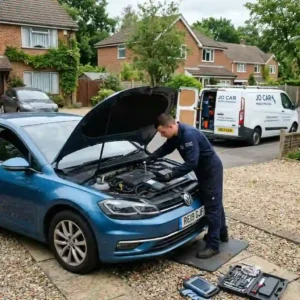
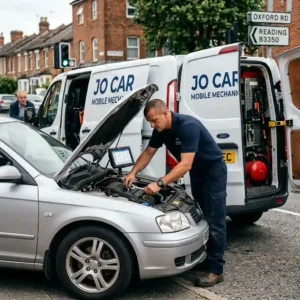
Modern mobile technicians possess the specialized locking tools, torque equipment, and diagnostic gear needed to complete many Timing Belt Replacement Reading jobs right on your driveway or at your workplace.
- Suitable On-Site Work: Vehicles with accessible front engine bays and clear working space around the timing cover are ideal candidates for mobile Timing Belt Replacement Reading servicing.
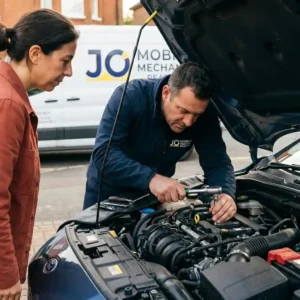
- Initial Assessment & Inspection: A mobile technician evaluates working conditions, checks engine bay clearance, and verifies that all replacement parts match factory specifications.
- Transparent Fault Repair: If related issues like oil leaks from camshaft seals are discovered, the technician discusses options clearly before proceeding with your Timing Belt Replacement Reading work.
- Workshop Referral When Needed: For complex engine layouts requiring full engine removal, heavy subframe drops, or specialized lifts, a reputable provider arranges workshop facilities to ensure safe completion.
To learn more about our background, equipment standards, and commitment to local service, visit our About Us page.
When Should You Arrange Timing Belt Replacement in Reading?
Making a proactive decision regarding your timing system protects your vehicle’s value and prevents unexpected roadside breakdowns. Consider booking a Timing Belt Replacement Reading inspection if:
- Interval Approaching: Your car is nearing its manufacturer-specified mileage or age limit.
- Unknown History: You recently purchased a used car without verified service records or maintenance receipts for a Timing Belt Replacement Reading check.
- High Mileage Accumulation: Your driving involves frequent stop-start trips, heavy loads, or high annual mileage.
- Visible Physical Wear: Cracks, fraying, or fluid contamination are present on or near the belt cover.
- Engine Misbehaviour: You notice unusual engine noises or misfires originating from the timing assembly.
- Upcoming Major Journeys: You want peace of mind before embarking on long road trips across the UK.
For additional information on routine roadside assistance or emergency engine evaluations, explore our specialized guides on Non-Fault Car Accident Repair Reading and Mobile Mechanic Reading.
FAQs About Timing Belt Replacement
How often should a timing belt be replaced?
Replacement intervals vary between 40,000 and 100,000 miles (or 4 to 10 years), depending on your vehicle’s make, model, and engine type. Always schedule a Timing Belt Replacement check based on your owner’s manual specifications.
What are the signs of a failing timing belt?
Common signs include ticking or slapping noises from the timing cover, rough idling, engine misfires, difficulty starting, or visible fraying and cracking found during a Timing Belt Replacement Reading inspection.
Can a timing belt break without warning?
Yes. Timing belts frequently snap without prior noise or operational symptoms. Adhering to time and mileage replacement schedules with a professional Timing Belt Replacement Reading provider is the best protection against sudden failure.
Is timing belt replacement expensive?
While booking a Timing Belt Replacement Reading service requires skilled labor and precision parts, the cost is a fraction of what you would pay to repair bent valves or replace an entire engine after a belt snapping incident.
Should the water pump be replaced with the timing belt?
Yes, if the water pump is driven by the timing belt, replacing both simultaneously during your Timing Belt Replacement Reading appointment is highly recommended to save on future labor costs.
Can a mobile mechanic replace a timing belt?
Yes, a qualified mobile technician with appropriate engine locking tools and flat ground access can carry out a Timing Belt Replacement Reading job on many popular vehicle models right at your home or workplace.
What happens if you don’t replace a timing belt?
Ignoring replacement intervals eventually leads to belt snapping or tooth stripping, making a late Timing Belt Replacement Reading impossible before catastrophic internal engine damage occurs on interference engines.
Safeguard Your Engine with Timely Maintenance
Leaving your timing belt past its recommended service life exposes your engine to avoidable, high-cost repairs. Whether you need a routine interval check, a water pump replacement, or a complete belt renewal on your driveway, taking action early protects your vehicle’s long-term performance.
To schedule an inspection or request a quote for your vehicle, visit our main Services page or contact our team directly via our Contact Us page today for expert Timing Belt Replacement Reading guidance.