Is your car struggling to start on cold mornings, or are your headlights looking dimmer than usual? When your vehicle refuses to turn over on your driveway, it’s easy to assume you need an immediate replacement. However, starting issues can stem from several underlying electrical faults within your vehicle’s charging circuit. Understanding the warning signs and knowing when to arrange professional Car Battery Replacement Reading services ensures you replace your battery only when necessary, saving you valuable time and avoiding unnecessary breakdown expenses.
Is Your Car Battery Actually Failing?
A sluggish start or a quiet click when you turn the key points toward an electrical issue, but the battery isn’t always the sole culprit. Your vehicle’s starting and charging system relies on a delicate balance between the battery, starter motor, alternator, and wiring. Before jumping straight to an expensive replacement, recognizing the distinct warning signs of a weak cell helps you make an informed maintenance decision. Engaging a qualified Car Battery Replacement Reading specialist ensures your complete electrical system is accurately evaluated before any new parts are installed. Visit our Services to know more!
7 Signs Your Car Battery May Need Replacing
1. Slow Engine Cranking
When you turn the key or push the start button, the engine cranks sluggishly or sounds “tired” before catching. This extended cranking time indicates that the battery can no longer supply the high amperage required by the starter motor. Scheduling a Car Battery Replacement Reading assessment can determine if the battery’s internal plates have degraded.
2. Clicking Sound When Turning the Key
A rapid, sharp clicking noise upon turning the ignition usually means there is just enough charge to activate the starter solenoid, but not enough power to turn the heavy engine over. This distinct sound is a classic indicator that you require a professional Car Battery Replacement Reading evaluation.
3. Dim Headlights and Unusual Electrical Behavior
Batteries power all on-board electronics when the engine is off and stabilize voltage while driving. If your dashboard lights flicker, power windows operate slowly, or headlights dim while idling at traffic lights, your battery is struggling to hold an adequate charge. A Car Battery Replacement Reading technician can test whether your cell voltage is dropping under load.
4. Battery Warning Light on the Dashboard
An illuminated battery or charging symbol on your instrument cluster alerts you to a serious voltage irregularity. Under official guidelines from the DVSA Vehicle Testing Standards, electrical charging errors or dashboard warnings can also lead to an MOT test failure. Arranging a Car Battery Replacement Reading diagnostic scan ensures all underlying electrical errors are resolved promptly.
5. Repeated Flat Battery
If your vehicle routinely dies after being parked overnight or over the weekend, the battery is likely losing its ability to retain power. Arranging a Car Battery Replacement Reading specialist to test for internal cell degradation will confirm if the unit has reached the end of its functional lifespan.
6. Battery Age Exceeding 3 to 5 Years
Most standard vehicle batteries have a functional lifespan of 3 to 5 years under normal driving conditions. As chemical components inside age, power output naturally degrades. If your unit is over four years old, proactive Car Battery Replacement Reading prevents unexpected breakdowns on cold mornings.
7. Frequent Need for Jump Starts
Relying continuously on jump leads or portable booster packs to get your vehicle moving damages your car’s sensitive electronics and indicates a degraded battery that can no longer hold power safely. Seeking a Car Battery Replacement Reading service resolves the root cause permanently.
Could Something Else Be Causing the Problem?
Before investing in a Car Battery Replacement Reading service, it is critical to rule out other components within the charging circuit. Replacing a battery when another fault exists will only lead to another flat battery a few days later:
- Alternator & Charging Faults: A failing alternator will not recharge the battery while driving, causing even a brand-new Car Battery Replacement Reading unit to drain completely within miles.
- Starter Motor Failure: Internal wear in the starter motor can draw excessive current, mimicking a weak battery when turning the key.
- Parasitic Electrical Draws: A faulty electrical module, interior light, or aftermarket alarm drawing power while the car is off will drain a healthy battery overnight.
- Loose or Corroded Terminals: White or blue powdery corrosion on the battery posts creates electrical resistance, preventing full power delivery to the vehicle.
How Is a Car Battery Tested?
A professional Car Battery Replacement Reading diagnostic check avoids guesswork through a systematic four-step process:
- Visual Inspection: Checking the battery casing for physical swelling, acid leaks, or severe terminal corrosion.
- Voltage & State of Health Test: Measuring resting voltage and conducting a digital conductance test to determine remaining chemical capacity.
- Cranking Load Test: Monitoring voltage drop while the engine cranks to see how the battery handles high current demands during ignition.
- Charging System Check: Testing the alternator output while the engine runs to verify it delivers between 13.8V and 14.4V continuously.
How Do You Know Which Replacement Battery You Need?
Choosing the correct unit for a Car Battery Replacement Reading service involves much more than picking the cheapest option on the shelf. Modern vehicles require precise electrical and physical specifications:
- Vehicle Make, Model, and Engine Type: Engine displacement and fuel type (diesel vs. petrol) dictate the required starting power.
- Physical Dimensions & Terminal Layout: The replacement must fit the hold-down bracket perfectly and have positive/negative terminals on the correct side.
- Capacity (Ah) & Cold Cranking Amps (CCA): CCA measures the battery’s ability to start an engine in freezing temperatures—never fit a unit with lower CCA than manufacturer recommendations during your Car Battery Replacement Reading.
- Battery Technology (AGM / EFB vs. Standard Lead-Acid): Vehicles equipped with Start-Stop technology require Absorbent Glass Mat (AGM) or Enhanced Flooded Batteries (EFB). Fitting a standard lead-acid battery to a Start-Stop car causes early battery failure within months.
Can a Mobile Mechanic Fit a New Battery at Home?
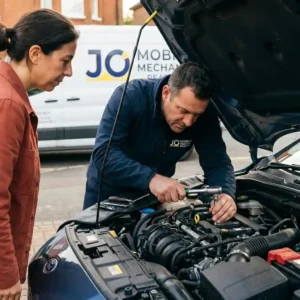
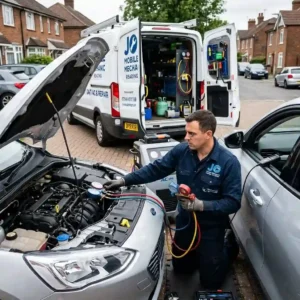
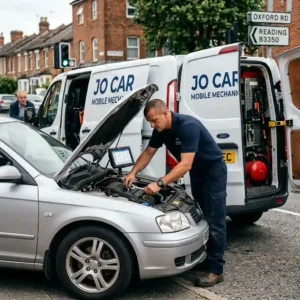
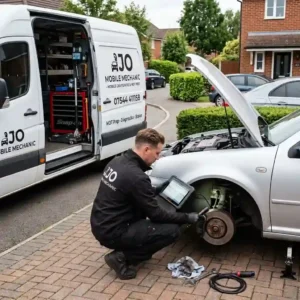
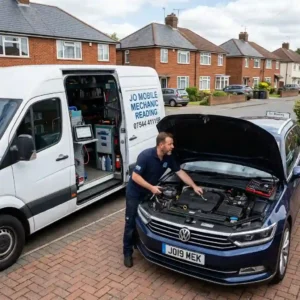
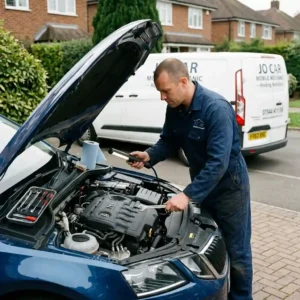
Yes, arranging a mobile battery fitting in Reading is one of the most convenient ways to resolve starting trouble without needing a tow truck. A specialist Car Battery Replacement Reading mobile technician brings the correct battery and professional diagnostic tools directly to your home or workplace.
The mobile fitting process includes:
- On-Site Battery & Alternator Assessment: Confirming the battery is genuinely at fault before performing any removal.
- Safe Power Retention & Disconnection: Using memory savers where appropriate to protect dashboard clock, radio, and ECU settings during the Car Battery Replacement Reading process.
- Correct Battery Installation: Securing the new unit into the tray and applying anti-corrosion protection to terminal posts.
- BMS Re-coding: Registering the new battery with your car’s Battery Management System (BMS) on modern vehicles so the alternator charges it correctly.
- Final Diagnostic & Voltage Test: Verifying complete starting performance and ensuring all dashboard warning lights remain cleared.
What Should You Do After Battery Replacement?
Once your Car Battery Replacement Reading service is complete, verify the following quick post-installation checks:
- Starting Performance: Ensure the engine fires up quickly and smoothly without any hesitation or electrical delay.
- Electrical System Function: Check that electric windows, central locking, clock, and infotainment systems operate as expected.
- Charging Voltage: Verify that the alternator charges the new battery properly at idle speed.
- Warning Lights: Confirm that all dashboard battery and check-engine lights remain off during operation.
- Secure Fitment: Ensure the hold-down clamp and terminal leads are tight and completely immovable by hand.
When a New Battery Doesn’t Solve the Problem
If your car continues to experience starting delays or flat batteries shortly after receiving a Car Battery Replacement Reading service, do not keep swapping batteries. Persistent starting issues point to underlying electrical faults, such as a failing alternator, damaged wiring looms, or a parasitic power drain that requires advanced vehicle diagnostics rather than another battery replacement.
Frequently Asked Questions
How long does a mobile car battery replacement take?
Most mobile battery replacements take between 20 to 40 minutes, including pre-testing, installation, and BMS registration on modern cars when carried out by a Car Battery Replacement Reading professional.
Why does my modern car need battery registration or coding?
Modern vehicles use smart alternators and Battery Management Systems (BMS) that adjust charging rates as a battery ages. Coding during your Car Battery Replacement Reading tells the computer a fresh unit is installed so it doesn’t overcharge the new battery.
What is the difference between an AGM and a standard car battery?
AGM (Absorbent Glass Mat) batteries are built for heavy electrical loads and rapid charging in Start-Stop vehicles. They last significantly longer and handle deeper discharge cycles than standard flooded lead-acid batteries fitted during Car Battery Replacement Reading.
Can I replace an AGM battery with a standard battery to save money?
No. Fitting a standard battery into a vehicle designed for AGM technology will lead to premature battery failure, electrical malfunctions, and potential Start-Stop system shutdowns. Always select the specified technology for Car Battery Replacement Reading.
What happens to my old car battery after replacement?
Old car batteries are classified as hazardous waste. A professional Car Battery Replacement Reading technician will collect and transport your old battery to a licensed recycling facility safely. For more detailed queries visit Service page to know about the specific work!
Need Car Battery Replacement in Reading?
If your engine is cranking slowly, your electronics are flickering, or your car refuses to start on your driveway, don’t leave yourself stranded. Booking a professional on-site evaluation ensures you get the exact battery your vehicle requires without any hassle or towing fees.
Visit our primary Mobile Mechanic Reading service page to book driveway diagnostics and mobile battery fitting. If you need immediate assistance, roadside testing, or technical advice, reach out via our Contact Us page to schedule your Car Battery Replacement Reading service today.