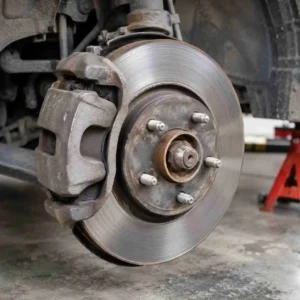
Brake pads are essential for road safety. Each time you press the brake pedal, they create friction against the discs to slow or stop the car. This gradually wears away the pad material, making replacement a normal part of maintenance. If you are wondering how long do brake pads last, the answer depends on several factors.
But how long do brake pads last before they need replacing? Most brake pads last between 30,000 and 70,000 miles, although their lifespan depends on driving habits, road conditions, vehicle weight and brake pad quality.
For UK drivers, stop-start journeys and busy town roads can mean frequent braking. Around Reading, this can make regular brake checks useful.
This guide covers lifespan, warning signs and maintenance.
How Long Do Brake Pads Last on Average?
Most brake pads last approximately 30,000 to 70,000 miles. However, this is a general estimate rather than a fixed replacement schedule. The best way to judge how long do brake pads last on your car is to check their actual condition.
The following table shows how different driving conditions can affect brake wear.
| Driving conditions | Effect on brake pads |
|---|---|
| Motorway driving | Often slower wear because braking is less frequent |
| Busy town traffic | Faster wear from repeated stops |
| Short journeys | Repeated braking can increase wear |
| Heavy loads | Greater braking demand |
| Aggressive driving | Additional friction and heat |
If you are researching how long do brake pads last on your vehicle, remember that mileage alone cannot confirm their condition. Two identical cars may need replacement at different times because of how they are driven.
6 Factors That Affect Brake Pad Lifespan
Several factors influence brake wear.
1. Driving Habits
Your driving style is one of the biggest factors affecting how long do brake pads last.
Frequent sudden braking creates extra friction and heat, gradually wearing the friction material. Accelerating quickly and braking heavily at the last moment can also put unnecessary strain on the system.
When approaching a traffic light, ease off the accelerator early and slow down gradually where safe. A sensible following distance gives you more time to react without repeatedly braking.
2. Stop-Start Traffic
Traffic lights, crossings, queues and roundabouts require frequent slowing, particularly during busy Reading commutes.
Consequently, how long do brake pads last can vary considerably between drivers who cover similar annual mileage.
3. Vehicle Weight
SUVs, larger family cars and commercial vehicles place greater demands on their brakes. Heavy equipment, extra passengers or towing can increase braking requirements. This is another reason how long do brake pads last varies between vehicles.
4. Brake Pad Material
Brake pads use different friction materials, each with its own performance characteristics.
Organic brake pads: Generally provide quieter operation but may wear faster depending on their construction.
Semi-metallic brake pads: Contain metallic materials and offer good braking performance and heat resistance.
Ceramic pads: Often quieter and produce less brake dust, but may cost more.
The material selected can influence how long do brake pads last. However, the correct choice depends on your vehicle manufacturer’s specifications, rather than price alone.
5. Front and Rear Brake Differences
Front brake pads generally wear faster than rear pads because the front braking system handles a larger proportion of the braking force.
As a vehicle slows, weight transfers towards the front wheels, increasing the load on the front axle.
6. Condition of the Braking System
Sometimes, brake pads wear unusually quickly because another component is faulty.
A sticking brake caliper may stop a pad moving away from the disc after braking. This creates continuous friction and heat, causing faster wear.
If replacement pads wear out unusually quickly, have the complete braking system inspected.
7 Warning Signs Your Brake Pads Need Replacing
Understanding how long do brake pads last is useful, but recognising the symptoms of excessive wear is even more important.
1. Squeaking or Squealing Sounds
A high-pitched squealing noise when braking can indicate worn brake pads.
Many pads have metal wear indicators that produce noise when the friction material reaches a particular level.
2. Grinding Noises
A harsh metallic grinding sound is a more serious warning.
It may indicate that the friction material has worn away, allowing the metal backing of the pad to contact the brake disc.
3. Reduced Braking Performance
If your vehicle takes longer to stop than usual, the braking system may have a fault.
Worn pads, damaged discs and hydraulic faults can all reduce braking performance.
4. Brake Warning Light
Some vehicles have electronic brake pad wear sensors that alert drivers when replacement may be necessary.
If a brake warning light or replacement message appears, check your vehicle handbook and arrange an inspection.
Not every vehicle has a dedicated wear sensor, so no warning light does not guarantee that the pads are in good condition.
5. Vibration When Braking
Vibration through the steering wheel or pedal can indicate a disc or component problem.
6. Vehicle Pulling to One Side
If your car pulls left or right when braking, it may indicate uneven braking force.
Uneven pad wear, a sticking caliper or another fault may cause this.
7. Thin Brake Pad Material
Brake pads become thinner as their friction material wears away.
A mechanic can measure the remaining material against the manufacturer’s recommendations.
When Should You Replace Brake Pads in the UK?
There is no universal mileage or calendar date for replacement. The pads’ actual condition should determine when work is needed. So, how long do brake pads last is best answered through inspection, not a fixed timetable.
As a practical maintenance guideline, mechanics often recommend considering replacement when the friction material reaches approximately 3mm. This is a maintenance guideline, not the legal MOT failure threshold.
The UK government’s MOT inspection manual classifies pads worn below 1.5mm as a dangerous defect. Pads worn down to their wear indicators are also a major defect. Read the official GOV.UK MOT inspection guidance for brakes.
Rather than relying only on how long do brake pads last, have the remaining friction material inspected. A mechanic can also check whether the discs or other components need attention.
How Can You Make Brake Pads Last Longer?
Although brake pad wear is unavoidable, good driving habits can help reduce unnecessary wear.
Anticipate traffic: Look ahead and slow down gradually instead of braking suddenly.
Avoid aggressive driving: Sudden acceleration followed by heavy braking increases unnecessary strain.
Remove unnecessary weight: Avoid carrying equipment or items you do not need.
Maintain your braking system: Arrange inspections to identify uneven wear and damaged components.
Choose suitable replacement parts: Always follow your vehicle manufacturer’s specifications.
Knowing how long do brake pads last helps with maintenance planning, but regular condition checks remain important, especially if you use your vehicle every day.
If you notice unusual braking noises, reduced braking performance or excessive pad wear, arranging a professional inspection is a sensible next step.
JO Car Mobile Mechanic provides mobile brake repair across Reading and nearby areas. Depending on the vehicle and fault, suitable work may be completed at your home, workplace or roadside.
You can explore the brake repair service in Reading to learn more about available assistance. For other vehicle maintenance requirements, visit the mobile mechanic services page.
Frequently Asked Questions
1. How Long Do Brake Pads Last in Miles?
Most brake pads last between 30,000 and 70,000 miles. However, driving habits, vehicle weight, road conditions and pad materials can cause significant differences.
2. How Often Should Brake Pads Be Checked?
Check pads during routine maintenance and whenever you notice unusual braking behaviour. Cars used heavily in stop-start traffic may need more frequent inspections.
3. Do Front Brake Pads Wear Faster Than Rear Ones?
Generally, yes. Front brake pads handle more braking force because vehicle weight transfers towards the front when slowing down. However, rear pads should also be monitored.
4. Can Brake Pads Last 100,000 Miles?
Although some pads may last exceptionally long, 100,000 miles is well beyond the commonly quoted range. If you are asking how long do brake pads last before reaching that mileage, do not rely on an estimate; have them checked.
5. Should Brake Pads and Discs Be Replaced Together?
Not always. If the brake discs remain within the manufacturer’s thickness limits and are in suitable condition, replacing the pads alone may be sufficient. A mechanic should inspect both components before recommending work.
6. Can a Mobile Mechanic Replace Brake Pads at Home?
Suitable pad replacements may be completed at home or work, depending on the vehicle and fault. Learn more about JO Car Mobile Mechanic.
Conclusion
So, how long do brake pads last? For many vehicles, the typical lifespan is between 30,000 and 70,000 miles, but the actual replacement interval depends on how and where you drive.
Frequent braking, heavy loads and mechanical faults can shorten pad life. These factors influence how long do brake pads last in everyday use. Watch for squealing, grinding, vibration, warning lights or changes in stopping performance. Arrange an inspection if these occur.
Do not wait for your next MOT if you suspect brake damage. A professional inspection can establish whether replacement is necessary.
If you experience a serious braking problem, avoid driving the vehicle and arrange appropriate assistance. JO Car Mobile Mechanic offers a 24/7 emergency mobile mechanic service in Reading, including bank holidays.
For enquiries or to arrange suitable assistance, contact JO Car Mobile Mechanic or call 07544 411158.