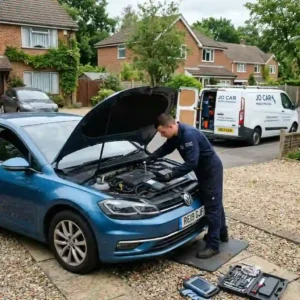
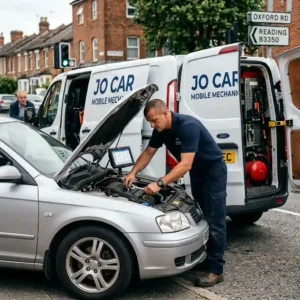
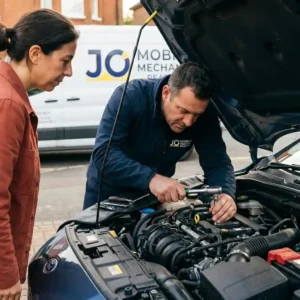
When your car starts making unusual noises, displays warning lights, or refuses to start, the first question that comes to mind is often, “What’s wrong with it?” Traditionally, finding the answer meant towing your vehicle to a garage and waiting for a mechanic to inspect it. Today, things are much more convenient. With the help of a professional JO Mobile Mechanic, drivers can have car problems diagnosed right at their home, workplace, or roadside.
For vehicle owners in Reading, this modern approach saves time, reduces stress, and often prevents small issues from turning into expensive repairs. A skilled mobile mechanic in Reading uses advanced diagnostic tools, practical experience, and systematic inspections to identify faults quickly and accurately.
In this comprehensive guide, we’ll explain how on-site diagnostics work, what tools are used, which problems can be identified, and why this service is becoming the preferred option for busy drivers.
What Does Car Diagnostics Mean?
Car diagnostics is the process of identifying the cause of a mechanical, electrical, or performance issue. Modern vehicles contain multiple sensors and onboard computers that monitor everything from engine performance to braking systems and emissions.
When something goes wrong, the vehicle stores fault codes and may trigger dashboard warning lights. A mobile mechanic can retrieve these codes and combine them with physical inspections to pinpoint the exact issue.
Diagnostics can reveal problems involving:
- Engine performance
- Battery and charging systems
- Brake systems
- Sensors and electronics
- Cooling systems
- Fuel delivery
- Ignition systems
Rather than guessing, diagnostics provide clear information that leads to accurate repairs.
Why On-Site Diagnostics Are Becoming More Popular
Drivers today value convenience. Taking a vehicle to a workshop often involves arranging transportation, waiting for appointments, and losing valuable time.
A mobile mechanic in Reading eliminates those problems by bringing professional diagnostic equipment directly to your location.
The benefits include:
- No towing in many cases
- Faster identification of faults
- Repairs often completed immediately
- Transparent explanations from the mechanic
- Less disruption to your schedule
This convenience is especially useful when the vehicle will not start or is unsafe to drive.
Step 1: Listening to the Driver’s Concerns
The diagnostic process usually begins with a conversation.
A skilled mechanic asks detailed questions such as:
- When did the issue start?
- Are there unusual noises?
- Which warning lights are on?
- Does the problem happen all the time or only sometimes?
- Have any recent repairs been carried out?
This information helps narrow down the possible causes and makes the inspection more efficient.
Step 2: Visual Inspection of the Vehicle
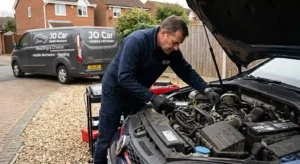
Before connecting electronic tools, the mechanic performs a thorough visual inspection.
This includes checking:
- Fluid levels
- Battery terminals
- Belts and hoses
- Visible leaks
- Wiring connections
- Tire and brake condition
Many issues can be identified immediately through careful observation.
Why Visual Checks Matter
Some faults do not trigger warning lights but still affect vehicle performance.
Common Visible Problems
A visual inspection may reveal:
- Cracked hoses
- Corroded battery terminals
- Loose connectors
- Oil leaks
- Worn brake components
These simple observations often provide valuable clues.
Step 3: Connecting the Diagnostic Scanner
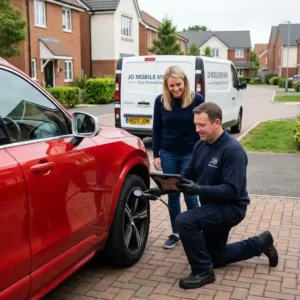
Most modern vehicles are equipped with an OBD-II (On-Board Diagnostics) port. A diagnostic scanner plugs into this port and communicates with the car’s computer systems.
The scanner retrieves:
- Fault codes
- Sensor readings
- Freeze-frame data
- System status information
Fault codes do not always identify the exact failed part, but they indicate which system requires further investigation.
Step 4: Interpreting Fault Codes
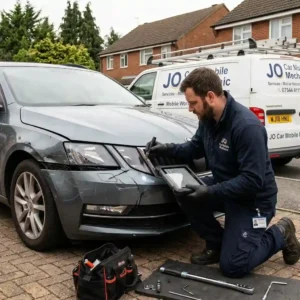
An experienced mobile mechanic does more than read codes. The real skill lies in interpreting what those codes mean in the context of the vehicle’s symptoms.
For example, a check engine code may suggest:
- Sensor failure
- Vacuum leak
- Ignition issue
- Fuel system problem
Without proper analysis, replacing parts based solely on codes can lead to unnecessary expenses.
Step 5: Live Data Analysis
Modern scanners provide real-time sensor data while the engine is running.
The mechanic can monitor:
- Engine temperature
- Fuel trim values
- Oxygen sensor readings
- Battery voltage
- RPM and throttle response
Live data helps identify intermittent or hidden problems that are not obvious during a static inspection.
Step 6: Battery and Charging System Testing
Electrical issues are among the most common causes of starting problems.
A mobile mechanic tests:
- Battery health
- Charging voltage
- Alternator output
- Starter performance
These tests quickly determine whether the issue is caused by a weak battery, failing alternator, or faulty starter motor.
Step 7: Mechanical Testing
If the issue appears to be mechanical rather than electrical, further testing may be required.
Common mechanical checks include:
- Compression testing
- Cooling system pressure testing
- Brake inspections
- Suspension checks
These procedures help confirm the root cause before repairs begin.
Step 8: Road Testing When Necessary
Some faults only appear while driving.
A controlled road test may be used to reproduce symptoms such as:
- Misfires
- Vibrations
- Steering issues
- Brake pulsation
- Transmission shifting problems
This allows the mechanic to observe the problem under real operating conditions.
Step 9: Explaining the Findings
Once the diagnosis is complete, the mechanic explains:
- What is causing the issue
- Which parts are affected
- Recommended repairs
- Estimated costs
- Expected repair time
This transparency helps the customer make informed decisions.
Step 10: Performing Repairs on Site
In many cases, repairs can be completed immediately after diagnosis.
Common same-visit repairs include:
- Battery replacement
- Brake pad replacement
- Sensor replacement
- Oil changes
- Minor electrical repairs
This saves the customer time and reduces the risk of further damage.
Common Problems a Mobile Mechanic Can Diagnose
On-site diagnostics can identify a wide variety of issues.
Engine Warning Lights
Check engine lights may be triggered by:
- Ignition faults
- Emissions issues
- Fuel system problems
- Sensor failures
Starting Problems
No-start conditions may be caused by:
- Weak batteries
- Faulty starters
- Fuel delivery issues
- Immobilizer problems
Poor Performance
Symptoms such as rough idling, hesitation, or loss of power can result from:
- Dirty sensors
- Faulty spark plugs
- Air leaks
- Fuel system faults
Brake Issues
Diagnostics can reveal:
- ABS sensor faults
- Worn pads
- Low brake fluid
- Hydraulic issues
Cooling System Problems
Overheating may be linked to:
- Coolant leaks
- Thermostat failure
- Water pump issues
- Radiator problems
Tools Used by a Mobile Mechanic
A professional mobile mechanic in Reading carries advanced equipment, including:
- Diagnostic scanners
- Multimeters
- Battery testers
- Compression gauges
- Pressure testers
- Hand tools
These tools enable accurate fault detection without needing a full workshop.
Benefits of Accurate Diagnosis
Correct diagnosis offers several advantages:
- Avoids unnecessary part replacement
- Reduces repair costs
- Speeds up repairs
- Prevents recurring issues
- Improves vehicle reliability
The right diagnosis is the foundation of every successful repair.
How Early Diagnostics Save Money
Many vehicle problems begin with small symptoms. Diagnosing them early prevents secondary damage.
For example:
- Weak batteries can strain alternators
- Worn brake pads can damage discs
- Coolant leaks can cause engine overheating
- Misfires can damage catalytic converters
Timely inspections can save hundreds or even thousands of pounds.
Why Reading Drivers Choose Mobile Diagnostics
Drivers in Reading often prefer on-site diagnostics because they:
- Avoid garage waiting times
- Receive immediate attention
- Benefit from convenient appointments
- Get direct communication with the mechanic
- Often have repairs completed the same day
This combination of speed and convenience makes mobile diagnostics an increasingly popular solution.
FAQs
How accurate are mobile diagnostic services?
Professional mobile diagnostic services are highly accurate when performed by experienced technicians using modern equipment.
Can a mobile mechanic diagnose a check engine light?
Yes, mobile mechanics can scan fault codes, analyze live data, and identify the cause of warning lights.
What if my car won’t start?
A mobile mechanic can diagnose starting problems on-site and often repair them immediately.
How long does a diagnostic inspection take?
Most diagnostic inspections take between 30 and 90 minutes depending on the complexity of the issue.
Can repairs be completed after diagnosis?
Yes, many common repairs can be performed during the same visit.
Is on-site diagnostics more convenient than a garage?
Yes, the service is performed at your location, eliminating travel and waiting time.
Conclusion
Car diagnostics is one of the most important steps in maintaining a reliable vehicle. A professional mobile mechanic in Reading can accurately identify mechanical and electrical problems using advanced tools, live data, and expert analysis—all without requiring you to visit a garage.
From warning lights and starting issues to brake faults and overheating, on-site diagnostics provide fast and accurate answers that help prevent unnecessary repairs and costly breakdowns. For busy drivers, this modern approach offers a convenient, transparent, and cost-effective way to keep vehicles in excellent condition.
With trusted providers like JO Mobile Mechanic, drivers in Reading can enjoy expert diagnostics and repairs right at their doorstep, saving both time and money while keeping their vehicles safe and dependable all year round.